The Case For Nationalizing Social Media
A few weeks ago, I asked: what do we (as a society) lose when we innovate at all costs? It was a question meant to cast convenience across from control; and there's a realm where that same question addresses, I think, a far more dangerous threat.
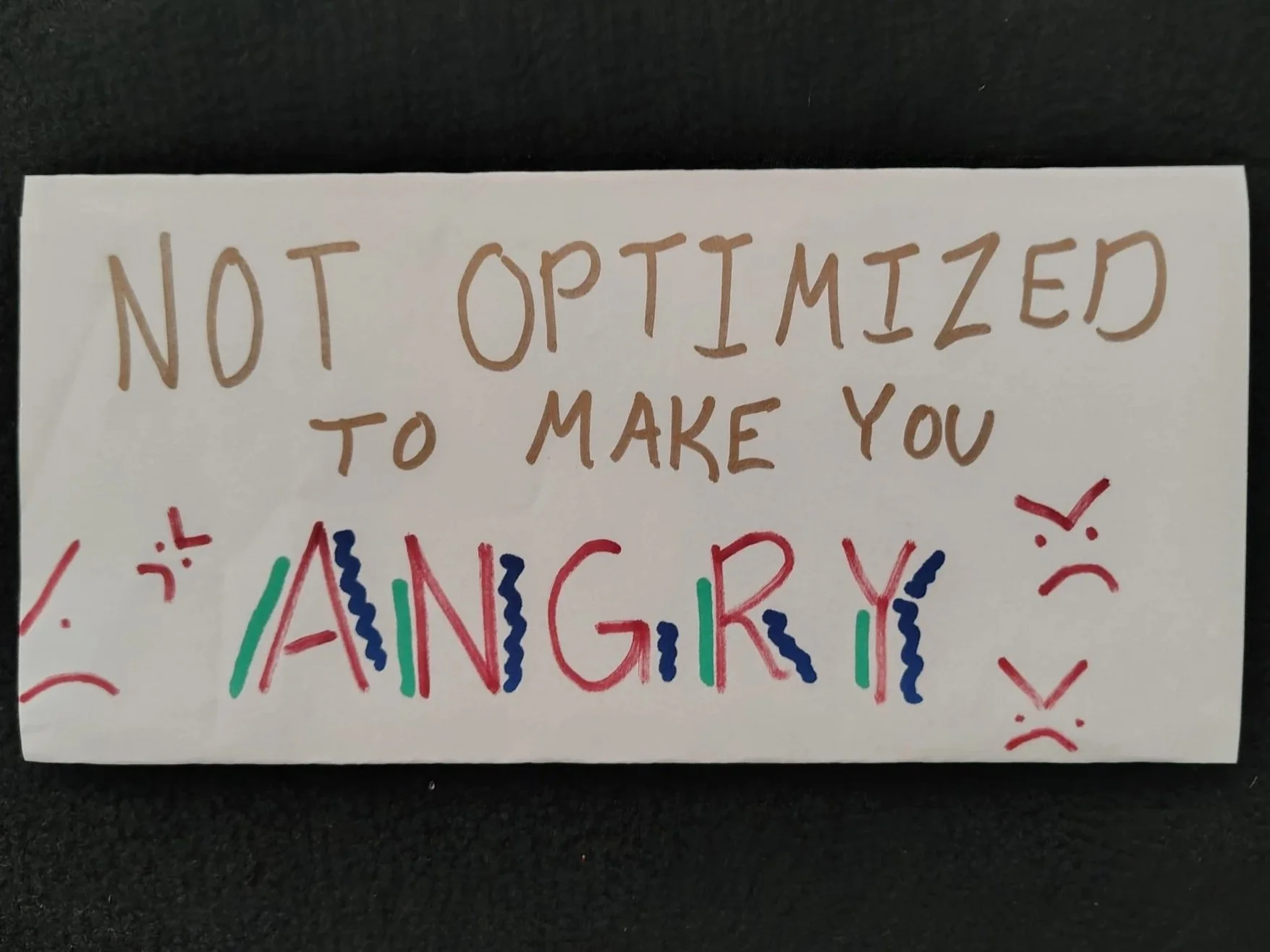
Social media, in its most basic form, provides people the ability to connect with each other by sharing ideas, imagery, discoveries, and so on. It is an evolution of broadcast media which preceded it; think radio, television, print newspaper – all unidirectional flows of information, where decision-makers within the broadcasting element determine which information flows to the audience with little room for direct feedback.
The iconic advancement of social media is exactly that: the ability to respond directly to information you receive. This can take the form of comments under an Instagram photo, reaction videos uploaded to YouTube, replies within a Reddit forum, and the like. On paper, nothing concerning so far except, maybe, the potential for information overload.
Shortly after Russia invaded Ukraine (in 2022, following the original invasion of Crimea in 2014), I was out with friends one night in Amsterdam. On the dancefloor, one friend looked at her smartwatch and grimaced; I asked her what was wrong, thinking she’d just received bad personal news.
“Oh, just the war. It’s stressing me out a lot,” she responded. She’d just gotten a notification from a news app on her phone. Despite being neither Ukrainian nor Russian, nor having any direct tie to the war, and despite being thousands of kilometers away, the global information machine pinged her wrist in the middle of a night out and noticeably changed her demeanor. Though this was a news app (so, more traditional news than social media-specific), that same instantaneity of information and the global reach of it is cause for concern that I’ll return to momentarily. She is also not alone: the amount of students I've had who, in university classes generally about innovation and business, have lamented how pervasive social media is and how the negative aspects of it dominate their lives and outlooks has given me cause to think and worry about this issue for some years now.
But back to social media: let’s turn our attention from what the technology does to who runs it. It’s hardly news that a very small number of (mostly US-American) companies are in control of the world’s largest social media networks. At first contact, I expect the reader to find this basic fact simple and mundane; but it’s also my hope that the deeper we get into this, the odder that will begin to seem.
What is the basic purpose of a company? Well, it depends on whom you ask. A traditional economist might say that a company is essentially a vehicle for transferring wealth from “the market,” whatever that might be, to a set of shareholders. At what cost (and at cost to whom) are significant questions that have been scrutinized from every possible moral, ethical, and sociological angle for nearly a century¹ – but let’s narrow our focus by asking what is the purpose of a social media company?
We can already assume a profit-driven orientation, since – at least to my knowledge – every major social media company is a for-profit entity (most being publicly traded). So, maybe we can answer that question with: the basic purpose of a social media company is to generate profit.
If you agree with me so far, we stand now at the cliff of what makes sense, and I hope you’ll take my hand and dive with me into the abyss of the nonsensical. How, then, do social media companies generate profit? You’ll notice that a basic membership to all the major social media companies is free. Sure, if you want LinkedIn Premium or if you want special flair on Reddit or something, you can pay these companies if you’d like. But the basic functionality (as above: sharing ideas, media, etc.) is entirely available to you without you, the user, paying a single cent.
We all have probably heard before that “if you don’t have to pay, you are the product.” We can understand, then, how that ties into the real answer to how social media companies generate profit: advertising revenue.
So, the intuitive next question: how do social media companies generate profit from advertising? This is where we will struggle to continue with general answers, if our intention is to specifically understand any one company. But that’s not our intention, and so a general (if contestable) answer is: social media companies generate profit from advertising by boosting content which engages more users and charging advertisers accordingly.
In other words, if you want to advertise some product – let’s say a flowerpot you’ve made – and your budget is only €15/month. You can absolutely pay Meta to run ads for your flowerpot on Facebook and Instagram, and you can tailor your target audience to whatever makes sense (probably people who show an interest in internet content about gardening, indoor décor, etc.) but for €15/month, your ads will probably run in conjunction with low-engagement content. Think baby videos, or pictures of fireworks – cool stuff, but not really the kind of thing that other users spend a lot of time on or engage with.
Now, if you raise your flowerpot advertising budget to, say, €150/month, Meta will adjust the content your ad gets shown in parallel with accordingly. And, as is well understood throughout the realms of cognitive psychology which examine human behavior on the internet, the types of content which engage users the most are incorrect or inflammatory material.² In the gardening corners of the social media networks I’m a part of, there are an infamous bunch of creators who post content that seems intentionally misleading (example: a video which tries to convince the audience that burying banana peels will eventually cause a bonsai banana tree to grow, which is so blatantly false that one must be impressed by the level of creativity to come up with such a thing); accordingly, the comments sections under their videos almost always devolve into dozens, hundreds, or sometimes even thousands of users going back and forth about the veracity of the claim. And what that means for the social media company is dozens hundreds, or sometimes even thousands of people spending extremely valuable time and attention on that single video; alongside which is exactly where your higher-budget ad will be placed.
A bit more concerning than gardening misinformation relates to the previous point about instantaneity: current events (such as political campaigns, major shock events like COVID-19, etc.) are essentially a breeding ground for misinformation and inflammatory content. This taps into some basic tenets of human sensemaking, which our brains are very good at on a local, slow level but which we are tragically underequipped to deal with at a global, instantaneous level. Social media companies currently have little incentive to slow down momentum-gathering content and conversations, but instead see them as lucrative spots in which to place advertisements for the highest-paying clients. And, in the most sympathetic view, who can blame them?
So, we can modify our above answer to: social media companies generate profit from advertising by highlighting misleading or inflammatory content, attaching ads to said time- and attention- grabbing content, and charging advertisers higher prices for placement alongside said content.
If we pair that with the basic profit-driven orientation of a social media company, there is almost no upper limit to how far this can be taken. Of course, public pressure can and has motivated some of them to integrate some form of fact-checking or political advertising disclaimers on some of their content, but even this is flawed or inconsistent in application.³
At this point, both in this discussion and overall in the timeline of social media innovation, it may be a good idea to pause, zoom out, and ask ourselves: what is, or what should be the purpose of all this? Is it right, proper, and fair that these companies and the technologies they have released with minimal restriction remain simply vehicles for transferring wealth to shareholders?
There are now concrete, unavoidable arguments that the companies themselves are incentivized to make the technologies described above as addictive as possible⁴, which shows special, concerning effectiveness on the minds of young adults and children⁵, leading a growing number of governments around the world to restrict social media usage for underage individuals.⁶
But is that enough? Do we look now at the highest degree of political and social fragmentation that the West has seen in decades (if not centuries)⁷ and do we think to ourselves: social media is an overall benefit?
I actually argue that the technology itself is hugely beneficial. The ability to connect to friends and family all across the globe and show pictures of big life milestones or adventures, the ability to grow supraterritorial communities around niche interests, and the ability for independent journalism and research to reach masses it otherwise wouldn’t in the preceding age of traditional media is tremendous.
But, I also argue, it is the form in which these technologies are delivered – that is, under stewardship of for-profit, non-democratic entities – that is a colossal failure of the collective which has wounded societies around the world⁸ and which will continue to wound so long as profit-oriented interests retain control of digitized means of human connection.
Nationalize it.
So, what is the alternative? “Simply,” to nationalize social media. At this point, I expect to lose some readers because that combination of words is absurd and unintuitive on initial contact; but, you’ve stuck with me so far, and I ask for a little patience.
“What do you mean nationalize? What nation on Earth should be in charge of such a thing?” might be the most ready-at-arms question. And it’s a good, chewy one – one with no right nor clear answer. Truthfully, the gargantuan size of these companies have grown beyond the Gross Domestic Product of several of the world’s countries combined.⁹ This means that any one Meta- or Alphabet-sized company has more than enough time, money, and lawyers to contest the capacity and authority of a national government - Meta at the moment is appealing a €200M EU fine and this very process will likely outlast the tenure of several regulators, all for a fine which is a pitiful drop in the company's $1.6T market cap. So, in some sense, these companies can engage or are engaged in long-term wars of attrition against nations; we must then graduate our thinking.
I ask then that you flex your idea of what constitutes a nation, if just for a moment. And, as we are talking about a more or less global technology, we must remain consistently aware that local nuance will always eventually take priority.
I live in the European Union, which is something like a pseudo-federation. Each member state is subject to a collective set of certain rules and regulations (for example, matters of educational accreditation), but at the same time, each member state also retains certain independent jurisdictions and functions (for example, militaries and civil aviation authorities) – these are sometimes allowed to conflict. I am from the United States, which is a bonafide federation of states (in which the single national government retains a lot of power, but each constituent state has some discretion over the laws and procedures governing its territory; these are generally not allowed to conflict). So, my view is flavored by these two governmental environments, but as they are so different, they must prong in two slightly different directions.
In the US, nationalization should be more or less straightforward, relative to the European suggestion. This also has historical precedent: for most of the 20th century, it was common for countries to have fully state-owned domestic phone networks without losing the ability to call abroad; international connectivity persisted through treaty-based interconnection standards, and this could be fairly easily replicated for social media. There must of course be fair compensation; each company should be nationalized at fair market value (which itself could erupt in debate), financed in all the ways that large infrastructure has been financed (long-dated public bonds) rather than confiscated outright. This conveniently answers the question of ad revenue: such a major purchase (Meta currently having a market cap of $1.5T) must involve bonds serviced by something, and that something could – instead of ads – be funded by a small monthly service fee (which several companies, Meta included, have proposed and explored before).¹⁰ There is a component argument that shareholders have already been overpaid by a business model built on unpriced public attention, but that’s another essay. The takeaway is that the US would/should nationalize its own companies inside its own jurisdiction, which makes this comparatively easy.
The EU has no such luxury. It doesn’t own Meta nor Google, and threatening to seize a foreign company’s global infrastructure is a fight too big for this Europe-sized dog. So the approach here would not be to seize what already exists, but it could more viably seek to create a genuine alternative where interconnection is the price of admission. This is the same principle as mentioned before, which let nationalized phone networks talk to each other without any of them owning any other. A publicly built, publicly funded platform financed by a flat admission fee instead of ad revenue, neutering the engagement-chasing incentive this whole argument is against. Nobody’s content needs to be harvested in order to be useful to anyone other than the creator nor its audience. Of course, both of these suggestions involve asking the user to pay for something which is currently, to them, free. And so both of these would need to go into effect at more or less the same time (momentarily suspending the possibility of a non-American, non-European competitor swooping in) with hefty public messaging around the whole “you are no longer the product, therefore the service is no longer free” update.
If this part of the argument seems shaky, you’re right: I myself have struggled to imagine exactly how this would play out, and I am certainly open to alternative suggestions. Mastodon and Bluesky have already proven credible public interest in open, federated social media protocol, and on these platforms creators and platforms interconnect out of choice, just like postal services exchanging mail by treaty rather than raiding each other’s sorting rooms. This is a slower, less dramatic path than command-and-conquer, but this is also probably more viable than that approach anyway.
So, you’ve made it this far. Is any of this gonna happen just because I wrote an essay? We should hope not. Will we see any action towards this in the coming future? Maybe. Maybe it’s worth seeing if your country has an equivalent to the Digital Services act yet, and what it requires platforms to disclose about how their algorithms rank content. If you’re in a professional role that builds or manages anything ad-funded, I argue you have a vague moral obligation to ask at the next product meeting (or whatever) what it is that your company is truly optimizing for. I won’t try to nudge you to join Bluesky or Mastodon, because you probably already know by now whether that’s your kind of thing or not.
Much about this argument remains murky; blinding complexity hides in simple questions like "should all social media companies be nationalized under one entity?" or "should all users pay the same fee?" Rather than writing a manifesto to address all these unknowns, I'd like to leave those questions for future thinkers to consider, if they agree that the basic premise has merit. But my main argument, if it can be boiled down to 31 words, is this:
For-profit social media ownership is non-democratic and ruinous to the social fabric we need to survive the coming century, and we are not hostages to business-as-usual. Things can and must change.
1: The Berle–Dodd debate, sparked by Adolf Berle's The Modern Corporation and Private Property (1932) and E. Merrick Dodd's response, arguing over whether corporations exist purely to maximize shareholder wealth or to serve broader social interests:
Bratton, W. & Wachter, M., "Shareholder Primacy's Corporatist Origins: Adolf Berle and 'The Modern Corporation'" — https://papers.ssrn.com/sol3/papers.cfm?abstract_id=1021273
Stewart, F., "Berle's Conception of Shareholder Primacy," Seattle University Law Review 34 (2011) — https://digitalcommons.law.seattleu.edu/cgi/viewcontent.cgi?article=2051&context=sulr
2: Sources:
Vosoughi, S., Roy, D., & Aral, S., "The Spread of True and False News Online," Science (2018) — the landmark study: false news reached 1,500 people roughly six times faster than true news, and was 70% more likely to be retweeted, with the effect strongest for political news. https://www.science.org/doi/10.1126/science.aap9559
The 2021 Facebook Papers / Frances Haugen disclosures — internal Facebook research confirmed engagement-based ranking rewards angry, divisive content because anger is easier to provoke than other emotions. https://www.technologyreview.com/2021/10/05/1036519/facebook-whistleblower-frances-haugen-algorithms/
3: Meta ended its third-party fact-checking program (active since 2016, conspicuously around a certain political campaign) but only in the United States, replacing it with a Community Notes model in January 2025. The same company runs different moderation standards in different jurisdictions depending on political pressure, which is about as clean an example of "inconsistent application" as you'll find.
4: Frances Haugen's 2021 Senate testimony and the Facebook Papers, wherein the whistleblower testified that Facebook knew its engagement-based algorithm favored angry, polarizing content and chose growth over implementing known safety fixes.
5: U.S. Surgeon General's Advisory, Social Media and Youth Mental Health (2023): up to 95% of 13–17 year-olds use social media, over a third "almost constantly," with the advisory citing ample evidence of risk of harm to mental health and well-being.
6: The list is growing and might be outdated by the time you read this, but currently:
Australia: first country to enforce a full under-16 ban (Dec 2025)
Indonesia: under-16 ban, phased from March 28, 2026
Malaysia: under-16 restrictions, June 2026
UAE: under-15 ban announced June 2026
France: under-15 law passed July 21, 2026, effective Sept 1, 2026
UK: under-16 ban announced June 2026, targeting 2027
Norway, Denmark, Greece, Spain, Italy, Slovenia, Portugal: various stages of proposal or partial implementation
7: Pew Research Center, Political Polarization in the American Public, its largest-ever study of U.S. political attitudes, found partisan antipathy "deeper and more extensive" than at any point in recent history, with ideological overlap between the two parties collapsing. https://www.pewresearch.org/politics/2014/06/12/political-polarization-in-the-american-public/ (ongoing series, updated through Pew's Political Polarization topic page: https://www.pewresearch.org/topic/politics-policy/political-parties-polarization/political-polarization/)
8: Multiple peer-reviewed longitudinal studies link social media misinformation exposure directly to COVID-19 vaccine hesitancy and reduced uptake:
Pierri, F. et al., "One Year of COVID-19 Vaccine Misinformation on Twitter," JMIR (2023) — https://pmc.ncbi.nlm.nih.gov/articles/PMC9970010/
U.S. longitudinal survey study establishing causal (not just correlational) support that social media news use increases vaccine hesitancy via efficacy skepticism — https://www.ncbi.nlm.nih.gov/pmc/articles/PMC9226607/
9: As of mid-2026, Nvidia's (I know, not a social media company) market cap has crested $5 trillion, rivaling (and at one point briefly overtaking) Germany's entire projected 2026 GDP ($5.45 trillion) — making it larger than every other European economy. Alphabet and Apple also individually exceed every European economy except Germany. Meta's market cap at the time of writing this article is $1.6T. https://www.euronews.com/business/2026/05/16/nvidia-surpasses-germany-how-the-market-caps-of-tech-giants-compare-to-top-economies
10: Meta's actual "pay or consent" subscription model in the EU, launched November 2023 at roughly €9.99/month for an ad-free experience, later lowered to €5.99 for web use after regulatory pushback. The European Commission fined Meta €200 million in April 2025 for non-compliance with the Digital Markets Act, and consumer groups (BEUC) continue to dispute whether the revised version is still non-compliant as of 2026. https://www.theregister.com/2025/07/03/meta_ec_dma_sulk/ https://euperspectives.eu/2026/03/meta-pay-or-ok/